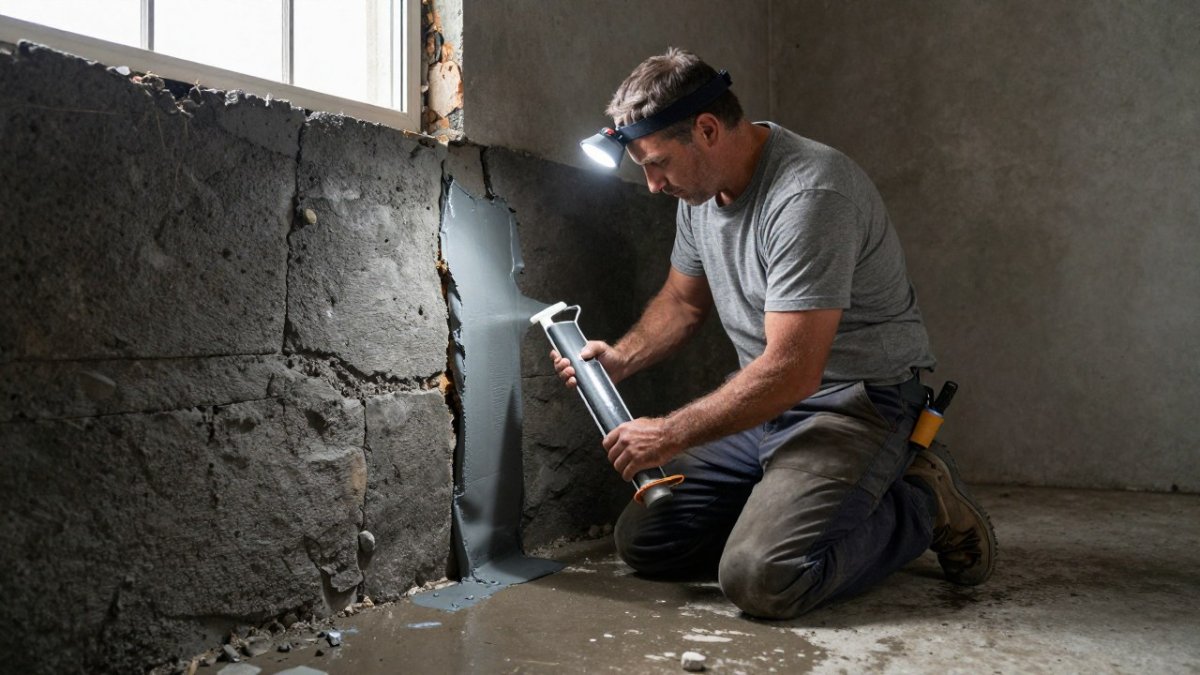
 Comparison
How to Choose the Best Sealant for Basement Wall Cracks
Last Updated: November 24, 2026
Quick Summary
The best sealant for basement wall cracks depends on the crack: a flexible polyurethane sealant handles most hairline and vertical cracks, hydraulic cement stops active leaks, and epoxy injection restores structural strength on dry, stable cracks. Match the product to the crack type, width, and whether water is pushing through.
- Vertical cracks are often non-structural and can be handled with flexible sealant or polyurethane injection.
- Hairline cracks under about 1/8 inch take penetrating concrete crack filler or elastomeric caulk.
- Epoxy is a rigid structural adhesive for dry, stable cracks; polyurethane is flexible and best for leaking cracks.
- Stop active water with hydraulic cement before injecting repair material into a leaking crack.
- Call a professional when a crack is horizontal, wider than 1/4 inch, or paired with bowing walls.
Table of Contents
- Best Sealant for Basement Wall Cracks: A Quick Comparison
- How to Choose a Sealant Based on Crack Type and Width
- Epoxy vs. Polyurethane Foundation Crack Repair
- How to Fix a Crack in a Basement Wall Leaking Water
- Choosing the Best Basement Wall Crack Repair Kit
- Basement Wall Crack Repair Cost: What to Expect
- When to Call Haynes Plumbing for Basement Wall Cracks
- Frequently Asked Questions
Best Sealant for Basement Wall Cracks: A Quick Comparison
Finding the best sealant for basement wall cracks starts with matching the product to the crack, not to the shelf label. Homeowners often waste money on the wrong tube of caulk. A flexible polyurethane sealant handles most hairline and vertical cracks, while hydraulic cement stops active leaks and epoxy injection restores structural strength.
Here is the short version before we break down each option:
| Product | Best For | Key Strength | Watch Out For |
|---|---|---|---|
| Polyurethane injection kit | Active leaks, narrow vertical cracks | Expands to fill the full depth | Needs clean surfaces to bond |
| Hydraulic cement | Water actively pushing through | Sets fast under pressure | Rigid, cracks again if wall moves |
| Epoxy injection | Structural, non-moving cracks | High bond strength | Fails on wet or moving walls |
| Elastomeric caulk | Hairline surface cracks | Stays flexible | Not for water under pressure |
A common mistake is grabbing waterproofing paint and calling it a repair. Paint hides a crack; it does not fill it. The sections below show you exactly which product fits your wall, and when to stop and call a licensed plumber instead.
How to Choose a Sealant Based on Crack Type and Width
Choosing a sealant comes down to four questions: where the crack sits, how wide it is, whether the wall is moving, and whether water is pushing through right now. Answer those and the product choice becomes obvious.
Vertical vs. Horizontal Cracks
Vertical cracks in a basement wall are often non-structural, and a flexible sealant or polyurethane injection can handle them.
Horizontal cracks are a different story. A horizontal crack often signals soil pressure pushing against the wall, and that is structural damage. Watch out: sealing a horizontal crack without an assessment can hide a problem that keeps growing. Have a professional evaluate it first.
Hairline Cracks vs. Wide Cracks
Hairline cracks under about 1/8 inch take a penetrating concrete crack filler or elastomeric caulk. Wider cracks need a backer rod and a flexible sealant, or polyurethane injection for full-depth filling. Anything wider than 1/4 inch, or a crack that has widened over time, deserves a professional look before you seal it.
Epoxy vs. Polyurethane Foundation Crack Repair
Epoxy and polyurethane both use crack injection, but they solve different problems. Epoxy is a rigid structural adhesive with high bond strength. It works on dry, stable cracks where you want to restore the wall's strength. Polyurethane is a flexible foam that expands and cures in the presence of water, making it the better choice for active leaks and cracks that may move.
Here is how the two compare in practice:
- Epoxy: strongest bond, dry applications only, no flexibility, best for non-structural cracks you want to stiffen
- Polyurethane: flexible seal, tolerates damp concrete and hydrostatic pressure, expands to fill voids, best for leaking cracks
- Cure time: epoxy cures hard and fast; polyurethane foam sets within hours but keeps some give
The American Concrete Institute guidance on crack repair treats crack movement as the deciding factor. If the wall moves, choose flexible. If it does not, epoxy gives you the strongest lasting repair.
How to Fix a Crack in a Basement Wall Leaking Water
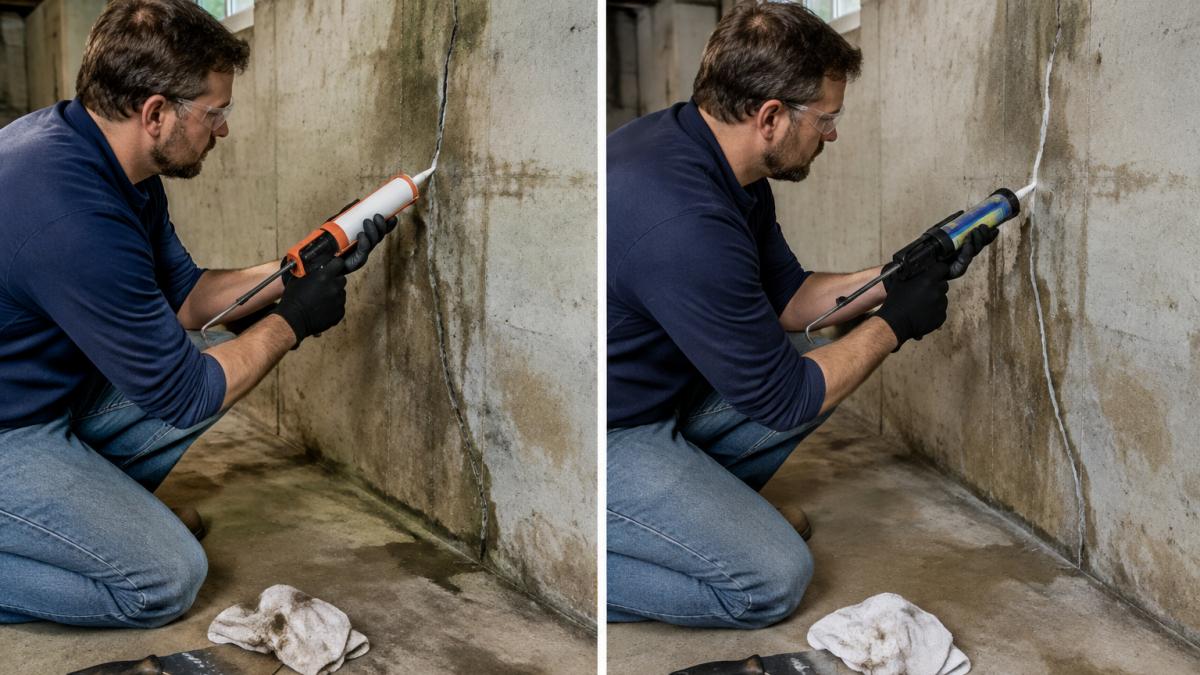
Fixing a leaking basement wall crack means stopping the water first, then sealing the crack itself. Skip the first step and your sealant will fail within a season.
- Clean the crack. Remove dust and debris with a wire brush and vacuum. Sealant will not bond to a dirty surface.
- Widen the groove slightly. Use a cold chisel or grinder to create a V-shape so the filler reaches depth, not just the surface.
- Stop active water. Pack hydraulic cement into the crack while water is flowing. It sets under pressure.
- Inject repair material. For a full-depth repair, use a polyurethane injection kit following the manufacturer's port spacing.
- Seal the surface. Apply a flexible sealant over the filled crack and tool it smooth.
- Cure and check. Let the product cure fully, then watch the crack through the next heavy rain.
If water keeps returning, the crack may not be the real source. A failing sump pump or poor drainage outside often drives water through the wall. Our team can check your sump pump for signs of malfunction or provide professional water leak detection to find the true cause. For persistent wall leaks, sump pump installation is often the lasting fix.
Choosing the Best Basement Wall Crack Repair Kit
The best basement wall crack repair kit is a polyurethane injection kit for leaking or narrow cracks, and a hydraulic cement plus surface sealant combination for active seepage. Kits work best on cracks you can reach, clean, and dry out enough for the product to bond.
A typical polyurethane injection kit contains surface ports (also called injection ports or packers), a port adhesive or surface sealant, two resin components, injection nozzles, and a caulk-style gun or a dual-cartridge gun. Some kits add a diamond-tipped drill bit for the port holes. Epoxy kits use a similar layout but ship a rigid two-part epoxy instead of foam resin.
When comparing kits, check these details:
- Coverage length. A 10-foot kit suits most single wall cracks; measure the crack's full run before buying, because port spacing drives how much resin you need. Most practitioners space ports roughly 6 to 12 inches apart along a vertical crack.
- Resin volume. Small kits often hold enough resin for a few linear feet of narrow crack. Wide cracks and voids absorb far more resin than the label suggests, so buy a kit with headroom or plan to buy a second cartridge.
- Whether the foam is water-activated. Polyurethane that reacts with water is essential for damp concrete; epoxy kits require a dry crack.
- Ports and nozzles included. Count the ports against your planned spacing. Running short mid-job means a second trip to the hardware store while the crack sits open.
- Cure time and temperature range. Resin cure slows in a cold basement. Check the manufacturer's minimum application temperature before you start.
- Vertical vs. horizontal surface rating. Some surface sealants sag on vertical walls; confirm the kit is rated for wall cracks, not just flat slabs.
Note that a kit sold as a "crack filler" may be a surface-only product. Surface fillers seal the opening; injection kits fill the whole crack depth. For a lasting repair, match the kit to the crack depth, not just its width.
A common pattern is that homeowners buy a kit sized for a hairline crack and then try to use it on a 1/4-inch opening. The resin runs out before the crack is filled, and the partial fill leaks again at the next rain. If the crack is wider than about 1/4 inch, has visible displacement, or keeps leaking after a full kit is used, stop and have the wall assessed before buying another kit.
Basement Wall Crack Repair Cost: What to Expect
Repair cost depends on crack length, depth, water pressure, and whether the job is DIY or professional. A tube of sealant or a small injection kit is the low-cost route for a single hairline crack. Professional injection, drainage work, or structural repair costs more because it includes diagnosis, labor, and sometimes excavation.
Cost is generally driven by a few factors rather than a single number:
- Materials. A tube of elastomeric caulk or hydraulic cement is the smallest line item. A polyurethane or epoxy injection kit costs more because it bundles ports, resin, and nozzles. Surface waterproofing coatings add a separate materials cost if you plan to coat the wall after the repair.
- Crack length and width. Resin volume scales with crack depth and width, so a long, wide crack can consume several cartridges. Port count and spacing also rise with length.
- Access and preparation. Cracks behind finished walls, shelving, or mechanical equipment take longer to reach and clean. Grinding a V-groove and drilling port holes add labor time on both DIY and professional jobs.
- Water conditions. An actively leaking crack may need hydraulic cement staging before injection, and recurring leaks may point to drainage or sump work that sits outside the crack repair itself.
Professional pricing depends on the scope of the work. For a current price or a quote, visit the Haynes Plumbing website. Financing options may be available for larger projects.
A common pattern is that the lowest bid covers only surface sealing, while the leak returns after the next heavy rain. Ask whether the quote includes full-depth injection, port drilling, and a follow-up check, and compare bids on scope rather than headline price. If you want a straight answer on cost, contact our team and we will walk you through the options before any work begins.
When to Call Haynes Plumbing for Basement Wall Cracks
Call a professional when a crack is horizontal, wider than 1/4 inch, actively leaking despite a repair, or paired with bowing walls. Those signs point to structural or drainage problems that sealant alone cannot solve.
At Haynes Plumbing, we are available 24/7, and our technicians are fully licensed and insured. We handle both residential and commercial plumbing and basement waterproofing. Our basement waterproofing service can help address the source of the problem.
A crack that keeps leaking after a DIY repair usually means water is finding another path. Haynes Plumbing brings over 25 years of experience, 24/7 availability, and fully licensed, insured technicians to diagnose the real source and fix it for good. Get started with Haynes Plumbing and protect your basement before the next heavy rain.
Frequently Asked Questions
What is the best sealer for basement wall cracks?
The right sealer depends on the crack. For non-structural vertical cracks that are not actively leaking, an elastomeric caulk or polyurethane sealant works well because it flexes with minor movement. For active water leaks, expanding polyurethane foam injection is the standard choice. For cracks that need structural bonding, epoxy injection is stronger but less flexible. Hydraulic cement is best for stopping active leaks quickly before applying a permanent repair.
Can you seal a basement wall crack from the inside?
Yes, most basement wall cracks can be sealed from the inside. Polyurethane injection kits are designed for interior application and expand to fill the full depth of the crack. Surface sealers like elastomeric caulk can also be applied from inside. Keep in mind that interior sealing stops water from entering but does not fix the exterior water source, so pairing it with proper drainage and grading outside is important for a lasting repair.
How much does basement wall crack repair cost?
Cost varies widely based on crack size, location, and whether you DIY or hire a professional. Cost depends on the scope of the work, so for a current price or a quote, visit the Haynes Plumbing website. For an accurate quote on your specific situation, contact a licensed plumber to assess the crack and recommend the right repair method.
When should a basement wall crack be repaired by a professional?
Call a professional if the crack is wider than a quarter inch, if it is horizontal or stair-stepped, if the wall is bowing or bulging, or if water is actively pouring in. These signs can indicate structural damage or hydrostatic pressure that surface sealants cannot fix. A licensed plumber or foundation specialist can determine whether the crack is non-structural or needs a more involved repair.
